Top 5 Busiest Ports in China: Your Comprehensive Shipping Guide
Editor-User
October 25, 2026
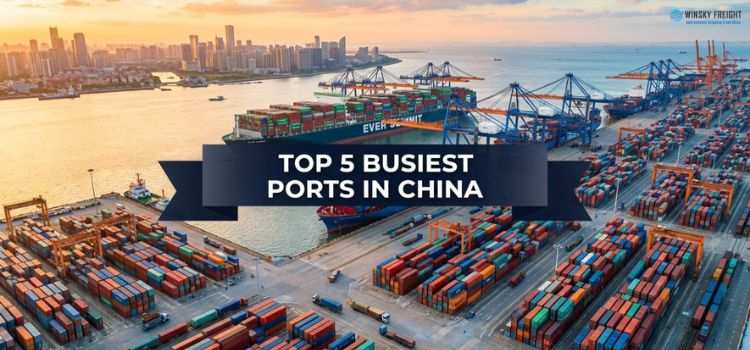
With a 14,000 km network of container ports, China is considered the “World’s Factory”.
If you’re in the import business, that’s quite a large area to figure out which is the right port to ship your products!
And one wrong decision can cost you profit. You’ll end up with extra inland trucking costs, delayed departures, peak-season hurdles, and so on.
To optimize import without hassle, you’ve to catch on every odd and even of the busiest ports in China, which comes down to five hubs:
- Shanghai
- Ningbo-Zhoushan
- Shenzhen
- Guangzhou
- Qingdao
There’s a BUT, however! Bigger ports don’t always mean all of them are better for your cargo category.
In this guide, you’ll learn about these chaotic Chinese ports and their regional specializations. So, by the end, you can exactly match suppliers’ locations to the right port.
- Map of Major Commercial Sea Ports in China
- Top 5 Busiest Ports in China
- Factors That Affect Port Selection In China
- How To Choose The Right Port For Your Shipment In China?
- Future Trends Shaping Major Sea Ports in China (2026 & Beyond)
- How Winsky Freight Streamlines Your China Export Logistics
- Frequently Asked Questions (FAQs)
Map of Major Commercial Sea Ports in China
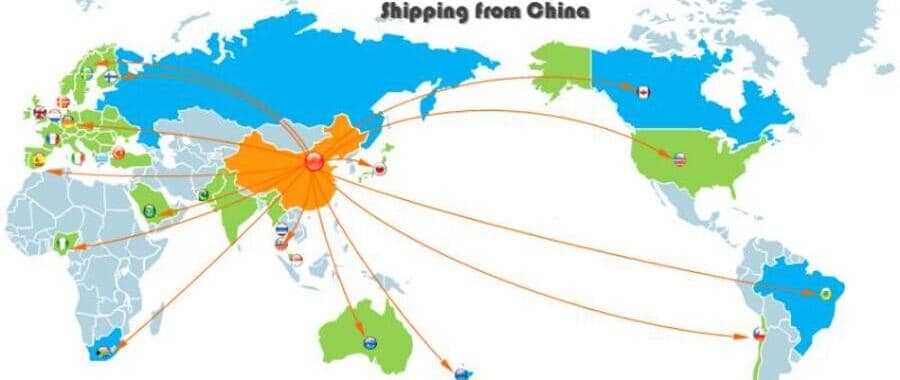
The Chinese seaports are clustered around 3 primary economic zones. To get a better understanding of the strategic spread across their main regions, see the map below:
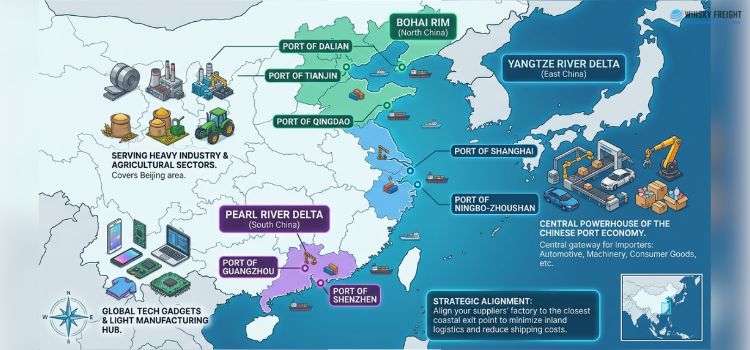
1. Yangtze River Delta (East China)
It’s the core powerhouse of the Chinese seaport economy. Most importers use this gateway for automotive, machinery, consumer goods, etc. They rely mainly on the Shanghai and Ningbo-Zhoushan ports.
2. Pearl River Delta (South China)
This southern religion is dominated by the Port of Shenzhen and Guangzhou. This is considered the global tech gadgets and light manufacturing hub.
3. Bohai Rim (North China)
Featuring the Port of Tianjin, Qingdao, and Dalian, this zone is well known for serving heavy industry items. It also covers the agricultural sectors surrounded by Beijing.
With this complete China port list in mind, you can align your suppliers’ factory to the closest coastal exit point. This is the first-step to reducing shipping costs when importing from China.
Top 5 Busiest Ports in China
These are 5 ports that facilitate the lion’s share of international container volume in China.
According to the latest TEU data and shipping capacity reports, the hierarchy of Chinese big ports has seen some changes.
For instance, unlike in the past, recently, Qingdao port has had more container volume than Guangzhou. Before diving into the deep, let’s take a glance at the table:
Chinese Major Port Comparison:
| Port | TEU (M+) | Region | Best For | Main Destinations |
|---|---|---|---|---|
| Shanghai | 50 | East China | Large exporters | USA, Europe |
| Ningbo | 36 | Zhejiang | Yiwu suppliers | USA, EU |
| Shenzhen | 31 | Guangdong | Electronics | USA West Coast |
| Qingdao | 30 | North China | Machinery | USA, Korea |
| Guangzhou | 26 | South China | PRD factories | USA, SEA |
Note: Above TEU figures represent baseline millions of twenty-foot equivalent units.
1. Port of Shanghai: Global Leader
The Shanghai port in China has been the busiest container port in the world for 15 consecutive years. Last year, it pushed past the 50 million TEU milestone in overall throughput, making it a true juggernaut of global logistics.
Due to its geographical advantages, being at the mouth of the Yangtze River, it serves as the premier Yangtze River Delta hub.
What makes this port even better is the Yangshan deep-water port, which is built on the offshore islands, connecting the Donghai bridge.
Furthermore, the Chinese government made this particular zone highly efficient and automated, including the support of 5G network and AI-driven cranes.
Best for: If you’re planning to import heavy machinery, textiles, automobile parts, or general consumer goods, Shanghai is the go-to destination. Why?
Because it connects Chinese industrialized inland provinces to the sea. Another good part is that it handles vessels from all major shipping alliances. So, you get departure options daily to the United States and countries in Europe.
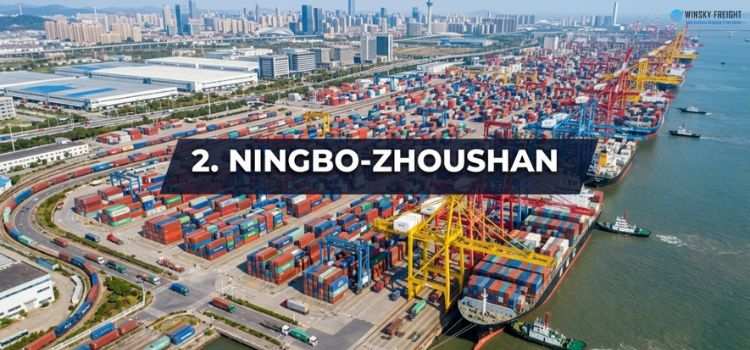
2. Ningbo-Zhoushan Port: Chinese Cargo Tonnage Giant
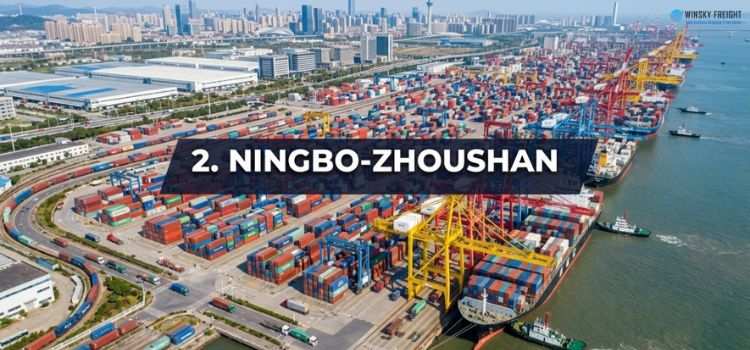
Ningbo-Zhoushan port leaves Shanghai behind when it comes to total cargo tonnage. With 36+ million TEUs of containerized freight capacity, it successfully handled 1.4 billion tonnes in a single year, which is itself a world record.
Well, it was possible because the port accommodates the largest seavessels in existence. Located in the south of Shanghai, across Hangzhou Bay actually gives it an edge.
Best for: If you’re sourcing consumer goods from China, specifically from suppliers located in Zhejiang province, Ningbo-Zhoushan cargo port is the excelled options. It also has a good track record of handling raw materials, crude oil, iron ore, etc.
Check out this guide if you’re planning to buy from the Yiwu wholesale market.
3. Port of Shenzhen: Global Electronics Export Hub in China
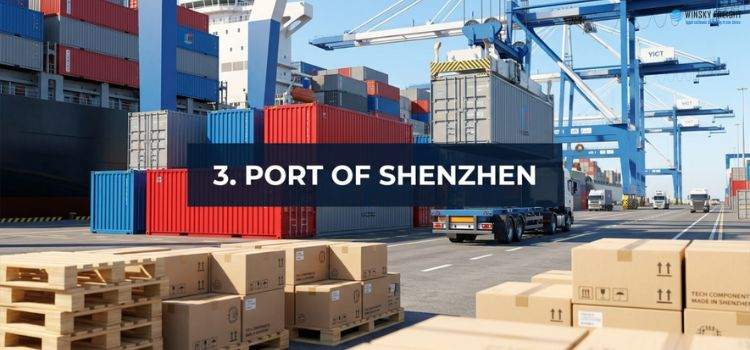
The port of Shenzhen is located in Guangdong, synonymous with China’s tech boom. Considered as the primary gateway for goods manufactured in the tech capital of the world, it handles 31 million TEUs annually.
Unlike others, this one is actually a collective of a few different sub-ports that are spread across the city coastline. Such as;
● Yantian Port
This deep-water harbor is located in the east and is popular for massive trans-Pacific routes. It manages 50% of Shenzhen’s total container throughput, accounting for 15-16 million annually.
If you import from China to the USA, states like Los Angeles or California, it’ll mostly depart from the Yantian port.
Because of the speed and efficiency in large-scale exports, the port is favored by people managing Amazon FBA forwarding.
● Shekou and Chiwan
Located in the west of the Pearl River Delta, these two sea terminals are preferred for exporting to Asian destinations, bulk cargo, river-sea transshipment.
Shekou (SCT) handles approx 6.6 million TEUs annually. On the other hand, Chiwan manages 5+ million TEUs.
Best for: The Port of Shenzhen is one of the busiest ports in China for handling consumer electronics, smart/tech gadgets, furniture, and apparel. If you’re sourcing from Dongguan and Shenzhen, this is the port where your goods are sorted.
4. Port of Qingdao: Automated Container Terminal Giant
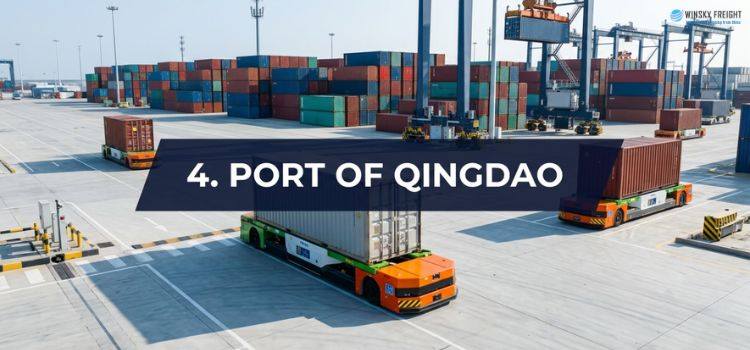
Being the pioneer port in Northern China, the port of Qingdao recently surpassed the 30 million annual TEUs benchmark.
With this port, China connects its supply chain from Northeast Asia to the rest of the world. The geo advantage makes this suitable for trading with South Korea, Japan, and even the United States.
Qingdao stands out from other Chinese ports for being a fully automated logistics hub, featuring 5G, hydrogen-powered, and artificial intelligence-backed Automatic Guided Vehicles.
Because of this modern infrastructure, Qingdao achieved the world’s fastest container loading speed. The terminal is also famous for its massive cold-chain logistics parks.
Best for: Go for the port of Qingdao if you plan to import agro goods, temperature-sensitive products, chemicals, or heavy machinery.
5. Port of Guangzhou: Pearl River Delta Gateway
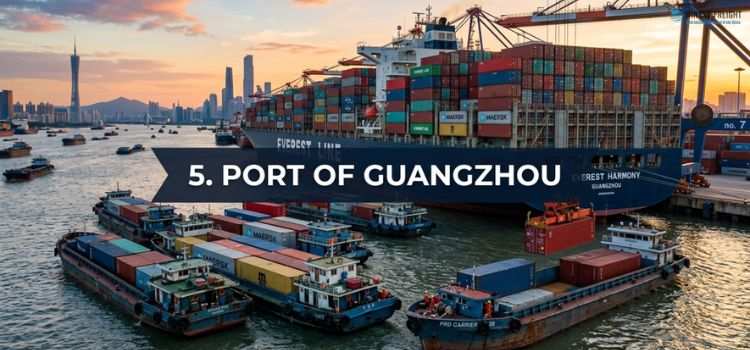
Just a few years back, Guangzhou was a step ahead of Qingdao before its automation took over. This historical maritime center of South China handles roughly 26 million annual TEUs. It’ll cross the mark soon as its Nansha terminal is rapidly growing.
What makes Guangzhou apart from other busy ports in China is its intermodal transportation (sea-rail) network. With that support, it directly connects the deeper inland manufacturing hubs from the southwest and south China to the coast.
Also, the terminal features a big hub for domestic transshipment. That means, products from smaller river barges down the Pearl River, which are then loaded onto larger international ships.
Best for: The port of Guangzhou is mostly used for exporting textiles, garments, automotive, raw materials, etc. If your Chinese supplier or factory is located on the western side of the Pearl River Delta, you can get better drayage rates if routing from Guangzhou compared to Shenzhen.
Want to find which port is the right departure point for your business? At Winsky Freight, we’ve been handling shipments for clients for over 8 years. We deeply understand which port is most cost-effective and best matches each business type. Get our help now.
Factors That Affect Port Selection In China
You can easily shortlist the busiest port in China by looking at the highest TEU ranking. But that doesn’t assure whether the port is right for your situation or not.
As an experienced logistics and freight forwarder in China, we at Winsky Freight consider several variables before finalizing the departure sea terminal for our clients. It’s wise to start with the following factors:
Inland Transportation Costs (Drayage):
To reduce the cost of shipping from China, choose the closest port to your supplier’s factory. Why does that matter most?
Because the trucking cost of a container from a factory in Yiwu to the port of Shenzhen can wipe out your whole profit margin. So, instead, go for Ningbo.
Port Congestion and Berth Availability:
Don’t ignore planning for peak season shipping hazards when importing from China.
Even the most automated and efficient ports like Qingdao experience bottlenecks during the Chinese New Year rush.
Always look for minimal anchor wait and high berth availability to avoid shipping delay.
Direct Shipping Lines Availability:
As mentioned above, each port has its own separate specific routing for global destinations.
For instance, Shenzhen has abundant direct routes to the US West Coast. On the flip side, Xiamen specializes in Southeast Asian routes.
Ship from the port that features a direct route to your preferred destination port. This way, you can ignore transshipment, meeting faster transit times.
Bonded Logistics Parks and FTZs:
Some of the Chinese busy ports are facilitated with bonded logistics parks and a Free Trade Zone (FTZ).
With such support, you can enjoy streamlined customs clearance, efficient consolidation of LCL and FCL shipping from multiple factories, manage import taxes from China.
Specialized Infrastructure:
In the case of shipping specialized goods like frozen foods, Qingdao’s reefer infrastructure is inevitable.
For shipping hazardous chemicals, Shanghai Port is one of the best alternatives if you properly follow the dangerous goods shipping guide.
Lastly, don’t forget about your Incoterms, as that dictates whether you or your supplier selects the port.
How To Choose The Right Port For Your Shipment In China?
Now, you’re halfway there with the geographical and capacity-related understanding of the major players. Let’s take a look at which port to choose based on your final destination. Practically, this is the framework Winsky Freight follows to ship goods from China for our clients.
Marked as one of the busiest trade lanes globally, this is the transpacific route to the US West Coast (Seattle, Long Beach, Los Angeles).
The Yantian terminal (Port of Shenzhen) is the best bet for southern manufacturers. It offers you the fastest shipping time from China to the USA (approx 12-16 days).
If your suppliers are located in East or Central China, go for the Port of Shanghai as it features many direct sailings to the US West Coast.
Just like US sea routes, your shipments will heavily rely on the Pacific crossing if you’re importing to Prince Rupert and Vancouver.
In our 8 years of experience, Qingdao and Shanghai ports seem to be the best for shipping from China to Canada.
For tech or electronics products, Shenzhen is the primary gateway.
If you want to ship to the UK or European hubs such as Hamburg, Felixstowe, Rotterdam, it’ll be carried through the Suez Canal, Seal-Rail intermodal transport via the New Eurasian Land Bridge.
Ningbo-Zhoushan and Shanghai ports are the king for the European trade case.
For Australina imports, southern Chinese ports give the fastest transit time. On that note, the ports of Guangzhou (Nansha) and Shenzhen are better options.
Due to the efficient transit time from South China to Melbourne and Sydney, these are popular among ecommerce and Amazon FBA sectors.
To ship to the UAE, both Guangzhou and Ningbo are excellent options.
However, Ningbo in particular is widely used to export every niche of goods from automobile parts to construction materials.
Future Trends Shaping Major Sea Ports in China (2026 & Beyond)
In our recent observation, all the major seaports in China are undergoing a rapid technological evolution. In a nutshell, they are switching from the manual to a more automated workflow.
Hyper-Automation
Just like Qingdao, the Chinese government is heavily investing in the 5G-backed AGVs (Automated Guided Vehicles) for Shanghai and Shenzhen ports.
The goal is to drastically reduce the turnaround times for vessels to overcome infamous shipping delays in China.
Sustainability and Green Ports
Chinese most busiest ports are adapting “Shore Power”, which allows ships to plug into the electrical grid rather than burning diesel while docked.
They are also deploying a hydrogen-electric tugboat to achieve zero-carbon terminals.
Digital Customs and Blockchain
With the recent application of blockchain technology and China’s digital logistics platform, the customs clearance process is now more streamlined.
With these upgrades, your paperwork, such as the certificate of origin and bill of lading get verifications instantly.
How Winsky Freight Streamlines Your China Export Logistics
Navigating through the busiest ports in China seriously requires boots-on-the-ground expertise. And honestly, it’s not a first-timer game, obviously, if you don’t want to burn thousands of dollars on experimenting with the wrong ports and shipping lines.
To take out the guesswork from your business, you can partner up with Winsky Freight like our 1200+ clients.
We’re doing it successfully, leveraging our pretty big network and deep relationship with the major carriers.
Based on your supplier’s location, we’ll choose the best port, aligning the fastest trading lane, tackling all the customs formalities like a breeze. You just focus on what you need the most, keeping your customers happy!
Book a call to get your custom quote within 24 hours.
Frequently Asked Questions (FAQs)
What Is A TEU In Shipping?
In freight shipping terms, TEU or Twenty-foot Equivalent Unit is the standard unit of measurement. It represents a port’s container capacity and throughput.
- One 20 ft container equals 1 TEU
- One 40 ft container equals 2 TEUs
Which Is The Largest Port In China?
Comparing container volume (TEU throughput), the Port of Shanghai is the largest and obviously the busiest in China. And if considering the total cargo tonnage, the Port of Ningbo-Zhoushan is the largest.
Is The Busiest Port Always The Best?
Not necessarily. The busiest port can also have higher warehousing charges and seasonal congestion, like Shanghai.
On the contrary, smaller ports like Guangzhou offer lower customs duty processing times, faster clearance, and cheaper inland trucking costs.
What Is The Difference Between Shanghai And Ningbo-Zhoushan Port?
Their main difference is the cargo focus. While Shanghai is focused on containerized consumer goods, Ningbo-Zhoushan specializes more heavily in bulk cargo.
Which Is The Best Port For Shipping Electronics From China?
The Port of Shenzhen (Yantian Terminal) is the best port for shipping electronics from China. It’s because it’s located in the center of the Pearl River Delta, which is the manufacturing epicenter for consumer electronics.