Door-to-Door vs. Port-to-Port Shipping: Which Option Is Best For Importers?
Editor-User
October 24, 2026
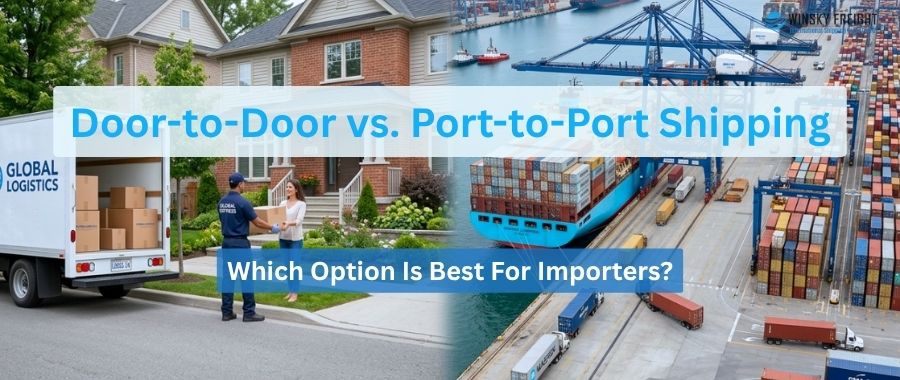
Door-to-door shipping is an all-inclusive freight forwarding service, giving you a hands-off import experience.
On the flip side, port-to-port shipping requires you to handle all destination customs formalities.
In this special guide, we’ll reveal the odds and even of these popular shipping methods. By the end, you’ll be smart enough to make the right logistical decision wisely.
- Quick Summary: Difference Between Door-To-Door & Port-To-Port Shipping?
- Deep Dive: What Is Door-To-Door Shipping International?
- Deep Dive: What Is Port-To-Port Shipping?
- How To Choose The Right Shipping Methods?
- The “Hidden Costs” Breakdown: Door To Door Vs Port To Port Shipping Cost
- Frequently Asked Questions (FAQs)
Quick Summary: Difference Between Door-To-Door & Port-To-Port Shipping?
In door-to-door shipping, your freight forwarder manages the complete shipping cycle on your behalf. So, your freight forwarder collects the goods from the supplier in China. Then deliver it to your mentioned destination (warehouse, home).
And port-to-port shipping service covers handling the products at and between the origin port and the destination port, whether it’s sea or air freight. The moment your products are unloaded at the terminal, your freight forwarder’s job is done. Therefore, you’re responsible for the customs clearance, trucking costs, and vice versa.
Quick Comparison: Door-to-Door vs. Port-to-Port Shipping
| Feature | Door-to-Door | Port-to-Port |
|---|---|---|
| Logistics Responsibility | Freight forwarder handles everything | You handle customs & destination processes |
| Initial Quote | Higher (all-inclusive) | Lower (freight only) |
| Total Landed Cost | Highly predictable | Unpredictable for new importers |
| Risk of Delay Penalties | Very low | Very high (demurrage/detention) |
| Customs Clearance | Included, managed by freight forwarders | You’ve to hire an agent/broker separately |
| Ideal For | Solepreneurs, Amazon sellers, startups, SMEs | Large enterprises with in-house logistics teams |
Deep Dive: What Is Door-To-Door Shipping International?
As mentioned earlier, this is an all-inclusive shipping method. Your forwarder provides you with one invoice, covering all costs from factory collection to your warehouse.
How It Works
At first, you need to hire a freight forwarder (for example, us or Winsky Freight). They:
- Send a transportation to your Chinese supplier’s factory
- Load the goods
- Transfer it to our Chinese warehouse for consolidation (if picking goods from multiple suppliers)
- Consolidate and repack
- Truck the goods to the origin port
- Handle the customs paperwork
- Load the items onto the vessel or plane
- Give you live tracking of the transit status
- Clear customs at your destination country
- Unload and deliver it to your warehouse doorstep
Pros
- Single point of contact. You just deal with the forwarder; they manage the rest of the supply chain
- Low risk of penalty. Your forwarder takes care of the inland transportation. There’s minimal risk of port storage fees (incurring demurrage) and container rental charges (detention).
- 0 customs hassles. Your freight agent coordinates all paperwork throughout the shipping.
Cons
- Higher upfront quote. It obviously makes sense as you’re getting a premium and complete shipping service.
- Less micro control. Since your forwarder manages everything, you can’t dictate granular decisions like which local tracking company to hire for last-mile delivery.
Door-to-Door Shipping Cost Projection
Your freight forwarder can almost always give you an accurate estimation of the total shipping cost that covers all the operational, brokerage, and customs fees. You get an all-in-one invoice with consolidated rates.
Best For
It’s the right shipping method for businesses without an in-house dedicated logistics team, such as e-commerce businesses, Amazon FBA sellers, etc.
Deep Dive: What Is Port-To-Port Shipping?
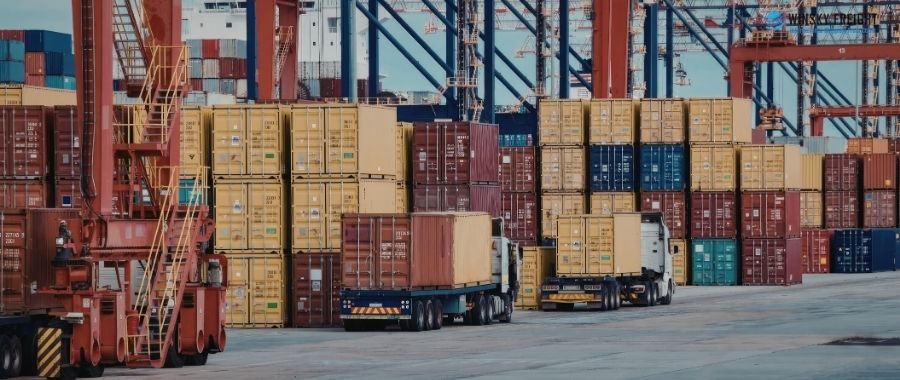
In international logistics, port-to-port shipping is more like a DIY approach. Here, your freight forwarder only tackles formalities between the origin terminal and the destination terminal.
You need to handle the rest, like trucking from the supplier’s factory, loading/unloading, all legal and customs paperwork in either country port, and final mile delivery.
How It Works
Yes, this process also starts with hiring a freight forwarder, but with limited responsibilities. Then;
- First, you or the supplier has to get the goods to the origin port. The process will be governed by Incoterms like CFR or FOB.
- Your partnered sea freight carrier transports the goods to your destination country port. You need to find a way to track the vessel’s live status.
- Next, you’ve to file the ISF (Importer Security Filing) in advance.
- Lead the customs entry, terminal fees, and other formalities.
- Finally, you must hire a drayage trucker to retrieve the container before the free holding time expires and transport the products to your destination.
Pros
- Lower opening freight quote. As you only pay the ocean or air transit fees.
- Complete control over the supply chain. Port-to-port shipping gives you the freedom to negotiate trucking costs in both countries. You can also choose your preferred customs broker.
Cons
- Highly risky. The controlling power comes with tons of complicated responsibilities. Newcomers often fail to find a trusted trucker, which eventually triggers substantial port storage fees and damaged goods.
- Multi-party coordination burden. As the center of contact to all related parties, you’ve to be active throughout the logistics process to solve expected issues.
Port-to-Port Shipping Cost Projection
Honestly, the port-to-port shipping process can seem like a better deal due to low initial quotes. But soon this can be surprising with numerous hidden charges, fees, and penalties for first-timers.
Best For
It’s only recommended if you’ve a large enterprise or factories with your own international logistics department, drayage trucker partners, private customs bonds. And these are crucial because things in international shipping always get messy.
How To Choose The Right Shipping Methods?
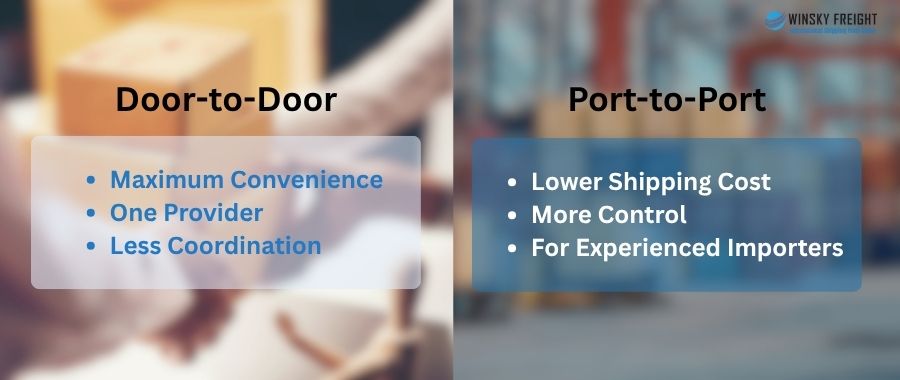
That’s a detailed forensic between both shipping methods. Overall, the decision to choose between port-to-port and door-to-door shipping vastly relies on your business operational capacity and its coordination with Incoterms 2020.
“Incoterms 2020 regulates the rules to distribute the risk, cost, and logistics responsibilities between sellers and buyers in international trading. ”
Real-World Scenarios
The following examples are the most common scenarios importers encounter when choosing between the two shipping modes. Let’s take a look/
Scenario A: Shipping Less Than A Container (LCL) → Choose Door-To-Door
If you’re a beginner importer, you won’t be importing a full 40ft container of goods. In that case, you must be utilizing LCL or Less Than A Container shipping strategy.
However, it’s not a straightforward method for delivering your goods in LCL. You’ve to transfer the cargo to a nearby Container Freight Station (CFS). There, the terminal operators unpack your items and deconsolidate them before delivery.
For an individual importer, the process of LCL deconsolidation, handling port fees, trucking costs can be a nightmare. Therefore, always choose door-to-door shipping for LCL.
Scenario B: Bulk Factory Imports With Trucking Fleets → Choose Port-To-Port
If you got a high volume shipment in the line, like 20 Full Container Loads (FCL) with your own or favorable fleets and local drayage provider, port-to-port shipping makes sense for you.
With the support of your dedicated in -house logistics team, you can cut down the markup of the freight forwarder.
Check out more on the differences between LCL and FCL shipping.
If you’re still bogged down, this decision matrix can help you reach your final decision, aligning with your business goals.
Shipping Method & Incoterm Decision Matrix
| If You Want To… | Recommended Method | Best Incoterm | Why It Fits |
|---|---|---|---|
| Get the lowest shipping cost or control over the logistical process | Port-to-Port | FOB | You get full control over freight costs and carrier selection. Best for experienced importers featuring their own forwarders. |
| Let the supplier arrange sea/air freight, but you handle customs and last-mile delivery | Door-to-Port | CIF | Supplier pays for freight and insurance to the destination port. You manage the import process and trucking. |
| Receive the product at your doorstep without booking freight | Door-to-Door | DAP | Forwarders deliver items to your location. However, import duties and final customs remain your responsibility. |
| Stress-free the entire importing process & avoid customs hassles | Door-to-Door | DDP | Best option for beginners and small businesses. The freight forwarder handles shipping, customs papers, duties, and final delivery. |
Note: We suggest taking a look at the nuanced difference between CIF and FOB before finalizing your decision. These are vital for importers looking to take control of their port-to-port or door-to-port shipments.
The “Hidden Costs” Breakdown: Door To Door Vs Port To Port Shipping Cost
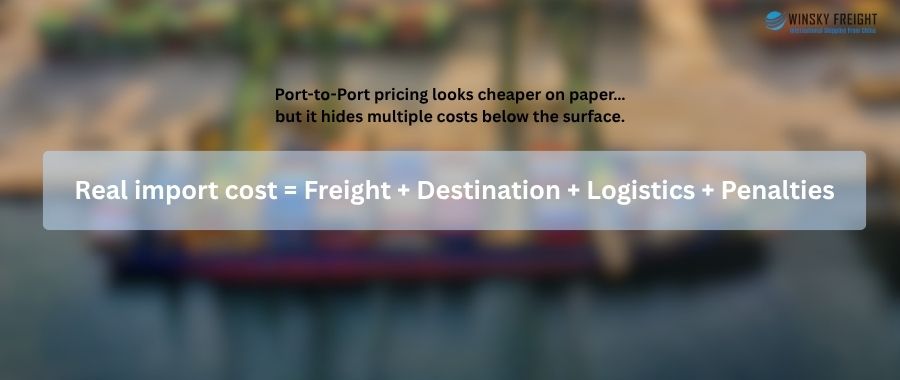
Among all the analyses, this is the most crucial section for you as an importer to choose between the door-to-door vs. port-to-port shipping methods. Why?
Because it’s not an orange-to-orange comparison, though it looks like when you see the port-to-port quote on paper for the first time.
However, it’s just the tip of the iceberg compared to what bills are waiting for you.
Extra Bills In Port-To-Port
In port-to-port shipping, the soon-to-be-paid bills are:
Destination Terminal Handling Charges (DTHC)
After arrival at your destination port, the terminal operators charge you for transferring your goods or container from the vessel to the container yard. Nothing’s free at the port.
Customs Entry Filings & Bond Fees
Next, you’ve to hire a licensed customs broker who files your formal entry and ISF. In case you’re importing to the United States, you must buy a single-entry or continuous customs bond.
Drayage (Inland Trucking) Costs
It’s typically the most expensive per-mile leg of your entire shipping cycle. To move your products from the destination ports to your final address, you need a specialized trucker. Even more, sometimes you may get a bill of “chassis split” fees, volatile fuel surcharges.
Demurrage and Detention (Penalties for Delays)
You get only 3-5 days to receive your items from the port. During this period, there won’t be any extra charges; however, afterward, there will be. And this often happens to port-to-port importers when their hired truckers delay.
In such a situation, the port charges Demurrage or storage fees. Furthermore, after you retrieve your container from the port, you’ve got a certain limited time to return the empty boxes.
And if you’re late, there will be Detention or equipment rental charges. The terrifying fact is that penalties can exceed $150-$300 per day.
Final Verdict
Choosing door-to-door vs. port-to-port shipping shouldn’t be a tough decision if you know your business goals and current capacity. If you’re a beginner, obviously, start with door-to-door shipping. You can always switch.
It’s like understanding the role and purpose of the whales–when to dive from the upper sunlit layers to the deep sea. It’s only when you’re ready to rule.
And sooner or later, you’ll eventually become that whale. Till then, you can get Winsky Freight’s help to ease your import journey and build your foundation. Contact us for any help regarding door-to-door or port-to-port shipping.
Frequently Asked Questions (FAQs)
What Is The Cheapest Way To Ship A 100 lbs Package?
For smaller shipments like 100lbs, it’s always better to choose door-to-door express freight shipping. It’s cheaper due to the minimum billing charges. Besides, importing 100 lbs of goods through port-to-port shipping isn’t viable.
Does Door-To-Door Shipping Include Customs Clearance?
Yes, in general, door-to-door shipping service includes customs clearance. However, whether the domestic tax and duty will be paid or not depends entirely on your chosen Incoterm.
If you ship under DAP (Delivered at Place), you receive a bill to pay the customs duties. And if you ship under DDP (Delivery Duty Paid), your freight forwarder manages all bills and processing on your behalf.
Why Is Port-To-Port Shipping Quoted So Much Cheaper Than Door-To-Door?
Because port-to-port shipping doesn’t cover all the costs. It only includes sea or air transit costs between the internal terminals. You’ve to pay other charges such as terminal and customs fees, inland trucking, loading/unloading charges, and overall Destination Terminal Handling Charges (DTHC) separately.
Who Is Responsible For Customs Clearance In Port-To-Port Shipping?
The consignee or buyer is responsible for customs clearance in a port-to-port shipping agreement. Buyers need to hire licensed customs brokers to handle the clearance and all formalities at customs.
Can A Beginner Use Port-To-Port Shipping For International Freight?
There’s no legal obligation to this. But port-to-port shipping is never advised, rather discouraged for beginner importers in international freight. Managing a port-to-port shipping requires handling complex legal documentation, strict timeline management, and dealing with unfavorable third parties like truckers and customs brokers to process a shipment. Any mistakes can result in costly penalties.