What is Incoterm FOB | Your complete Shipping Guide
Editor-User
October 15, 2026
Today, we’re discussing a widely recognized and commonly used incoterm in the world of international shipping
If you’re considering FOB for your upcoming shipment, then you’re in the right place. This guide is your one-stop resource for all things FOB. We’ll break down the responsibilities of both buyers and sellers, explain when the risk shifts, and clarify the advantages and disadvantages, so you can make informed decisions about when to use this incoterm. Let’s dive right in.
What is Free On Board (FOB)?
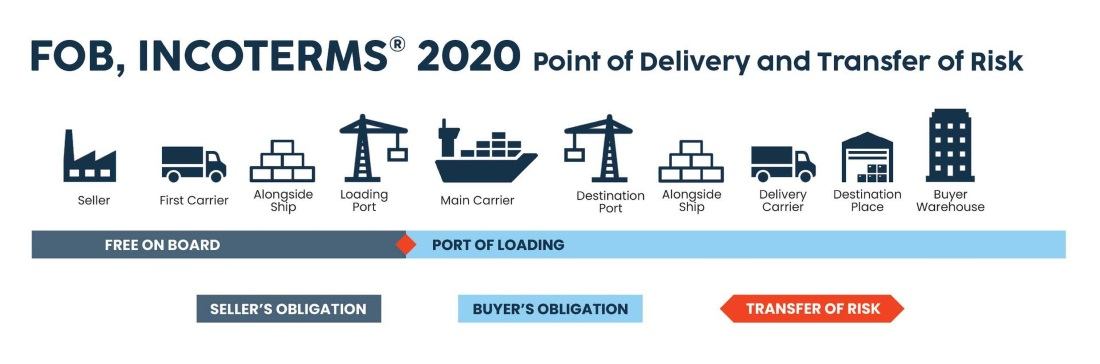
FOB is an incoterm used for shipping goods by ocean freight. When you choose FOB, it means the exporter handles export clearance and delivery to the port until your goods are safely loaded onto the ship. As it sounds, the supplier becomes “free” of responsibility once your goods are “on board” the ship. At that point, the risk of the shipment transfers to you. Usually, a destination is attached to the FOB incoterm which could be the port or shipping carrier. FOB is one of the oldest and most popular incoterms for sea shipping, but it does not apply to air, rail, or road transit.
What are the responsibilities of Buyers and Sellers in FOB?
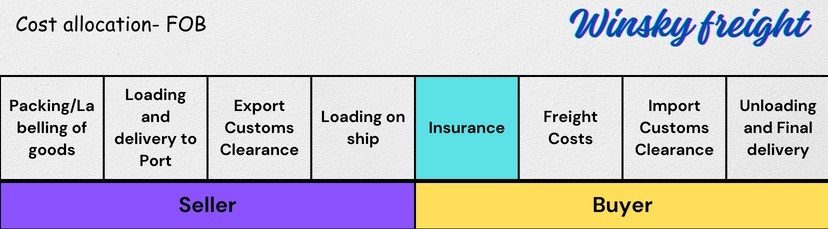
The Seller’s Responsibilities include:
- Packaging the goods to be ready for shipping.
- Delivering goods to the port.
- Managing export clearance and customs duties
- Providing necessary shipping documents to the buyer.
- Loading the goods onto the ship.
The Buyer’s Responsibilities include:
- Agreeing with the seller on the loading port and the shipping carrier to be used.
- Paying freight charges.
- Unloading the goods at the destination port
- Managing import clearance and customs duties
- Transporting the goods from the port to the final destination.
In summary, once the goods are loaded on the ship, the seller’s job is done, and you take over.
One other thing to remember is that there’s no built-in provision for insurance under FOB. It’s up to you to decide if you want insurance, and you can discuss this with the seller separately.
FOB Origin (shipping point) vs. FOB Destination
In certain circumstances, the responsibility of the seller can be extended in an FOB agreement. Whichever one you choose will determine who pays most of the freight costs.
In FOB Origin (Shipping Point), the exporter’s liability ends when the goods are in transit. You, the buyer, then take on all the risks and expenses from that point, including any potential damage or loss during the journey. It is the regular FOB procedure. However,
In FOB Destination, the exporter’s job does not end during transit. The goods must reach the destination port before they are free of liability. This means the seller covers the risk and costs of the whole journey to your destination. You then take on all the risks and expenses from that point, including any potential damage or loss during the journey.
FOB destination is quite similar to the CIF Incoterm, and it is rarely used in international shipping. While you might save more money using the FOB Destination, you’ll have less say over the shipping process.
When is it best to use FOB?
Here are some situations where FOB can become a favorable option for you:
- When you’re shipping by sea.
- When you have a preferred shipping route or shipping carrier that offers you special shipping rates.
- When you have a reputable freight forwarder that can help you negotiate superb freight costs.
- When you’re in a different country from the seller. The fact that the exporter takes care of clearance processes in their country makes this advantageous.
- When you’re shipping very bulky goods that would be challenging to transport from the seller’s warehouse.
Advantages of FOB for the buyer
Sellers may find FOB beneficial when shipping to distant or challenging locations where the risk of loss or damage is higher, as they avoid the stress of freight logistics. However, it is a great incoterm for the buyer because it limits their risk while still giving them some level of control during shipping. The advantages include:
- Control Over Shipping: In a FOB agreement, you have more control over shipping carriers and shipping costs. This can be valuable if you have established relationships with shipping carriers. It enables you to closely monitor and track your goods during transit.
- Cost Savings: With FOB, you or your freight forwarder can cut costs by negotiating with different carriers to find the most affordable one. This flexibility allows you to plan freight according to your budget.
- Reduced Risk: Since you only assume risks when the goods are safely on the ship, you avoid the difficulties and potential damages of transporting goods from the seller’s warehouse and loading them on the ship.
- Export clearance: This might be difficult for you in a foreign country. The seller handles this for you in FOB, and that’s a great advantage.
- Freight forwarder: It is easy to use a reputable freight forwarder when shipping. Your freight forwarder can take over from the seller and handle the entire logistics for you, including import clearance.
- Ease of International Trade: FOB is a globally recognized and easily understood international trade term, which makes it easy to avoid misunderstandings with your seller.
Disadvantages of FOB for the buyer
- Potential for Additional Costs: Delays or unforeseen problems during shipping and import clearance may add to your shipping costs.
- Shipping risks: Remember that any damages or losses during transit are your responsibility. This can be a significant risk when shipping delicate goods or shipping to distant locations.
- Import customs clearance: You’re in charge of the import clearance in your country. If you don’t understand the procedure, it can become a challenging task for you. You can use a freight forwarder to simplify the process.
- Not suitable for container shipping: If you require the seller to deliver goods to a terminal or container yard, FCA incoterms or other multimodal incoterms are recommended over FOB. These terms are better for such situations and cater to potential losses at the container station.
If you’re not experienced with FOB shipping, don’t worry; that’s why we’re here. Winsky Freight can streamline the shipping process for you and handle all logistics. Contact us to get a shipping quote today.
Best Alternatives to FOB
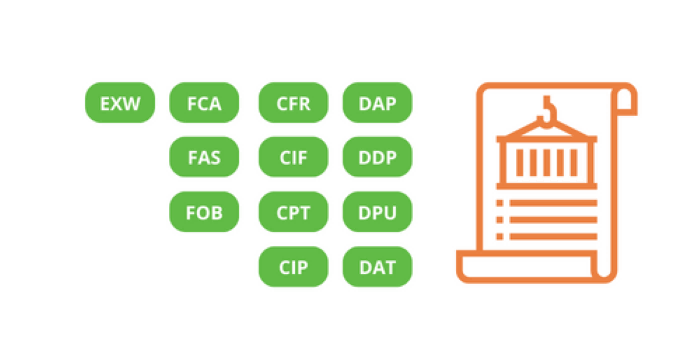
● FOB Shipping vs. CIF Shipping
In CIF shipping, the seller’s responsibilities extend beyond FOB. They are involved in other shipping activities till your goods reach the destination port, including insurance.
The point of risk transfer in CIF is at the destination port, unlike in FOB, which we have explained earlier, where it happens when the goods are on the ship. The pricing of CIF may overshoot your budget because you don’t handle shipping yourself.
● FOB Shipping vs. EXW Shipping
EXW places a minimal level of responsibility on the seller. The seller’s obligations conclude when they make the goods available at their warehouse, leaving you to take charge and oversee all other logistics from that point onward.
In contrast, it goes beyond this in FOB because the exporter gets to the port with your goods. While you enjoy full control over the shipping process in EXW, the seller’s responsibilities are significantly reduced, which makes EXW a cheaper shipping option than FOB.
● FOB Shipping vs. FCA Shipping
FCA shipping places the same level of responsibility on the seller as a FOB agreement. The key distinction is that, whereas FOB is exclusively used for ocean shipping, FCA applies to all modes of transportation, including air, sea, and rail shipping.
FAQs
How do I know FOB pricing?
Your costs are not limited to one place. You’re charged for the cost of the goods, delivery to the port of destination, and clearance duties. You should factor in these costs as well as the freight costs provided by your freight forwarder to plan your budget.
When does risk transfer in the FOB agreement?
You assume the risk when the goods are safely loaded on the ship. At that point, the seller’s job is done, and you take over.
Who Pays for Freight in FOB?
In a FOB origin agreement, you are responsible for paying freight costs, while the seller handles the costs in a FOB destination agreement.
Who is in charge of customs clearance in FOB shipping?
The seller manages export customs clearance, while you’re responsible for import customs clearance during FOB shipping.
Conclusion
Remember, this trade term minimizes your shipping risks and gives you a measure of control over the shipping process. This is why it remains one of the most popular incoterms. Throughout this article, we have covered the various responsibilities expected of a seller and buyer in a FOB agreement. You should weigh the pros and cons before you decide on this incoterm with your seller.
Are you ready to ship your goods under FOB? Partner with Winsky Freight and let us assist you in simplifying your shipping process. Contact us today.