
What is The Importer Security Filing (ISF)? Everything you need to know
The Importer Security Filing (ISF) is one important requirement you must be familiar with when shipping from China to USA by sea. To avoid being caught off guard by fines or delays, this guide will break down the components of the ISF and explain how to file it correctly when importing goods into the USA.
- What is ISF (Importer Security Filing)?
- Why is ISF Required?
- Who is Responsible for Filing the ISF?
- When do I need to file ISF?
- Requirements of the Importer Security Filing
- What Is an ISF‑5? (Special Cases)
- How to File ISF
- How much does ISF cost?
- Winsky’s tips and Best Practices for Filing ISF Correctly
- FAQs
What is ISF (Importer Security Filing)?
Importer Security Filing (ISF) is a compulsory cargo information filed in advance for goods shipped by sea freight into the USA. It was introduced by U.S. Customs in 2009 as part of the regulations known as “Importer Security Filing and Additional Carrier Requirements.”
What you need to do with ISF is simple. Before your ocean shipment heads to the USA, you or your customs broker must send certain information about your goods ahead to the U.S. Customs and Border Protection (CBP). This information is commonly known as the “10+2” rule, and it must be filled out at least 24 hours before your goods leave the origin port.
CBP uses the data obtained from the ISF to assess security risks and decide if any containers need closer inspection upon arrival. ISF only applies to cargo arriving by ocean vessel. It is not required for other transport modes into the U.S.
Why is ISF Required?
The most important reason the CBP requires ISF is for national security reasons. It is an effort to protect U.S. ports and supply chains from smuggling and terrorist attacks by identifying high-risk shipments before a vessel even arrives at a U.S. port. The ISF also makes customs clearance faster because authorities will have gone through most information ahead of time.
Who is Responsible for Filing the ISF?
The responsibility for filing an ISF lies with you, the importer of record (or an authorized agent). The ISF Importer is defined by CBP as the party causing the goods to enter the U.S. (which is usually the goods’ owner, purchaser, or consignee).
For ease of logistics, many importers assign the ISF filing to their customs brokers or freight forwarders. However, you should understand that even if someone else files for you, you as the importer remains legally responsible for the ISF. If there are any errors or late submissions, the penalties will be charged to you, even though you used an agent.
When do I need to file ISF?
We tell importers to always remember the “24-hour rule” when dealing with ISF shipment. This means that you must file the ISF at least 24 hours before the vessel carrying your goods is loaded at the origin port. If your container is scheduled to be loaded onto a ship tomorrow, the ISF must be submitted by today (a full day in advance).
CBP wants the data one day prior to loading so they can screen the shipment while it’s still overseas. If you miss this deadline, it is considered a late filing, and you can be issued penalties. Many importers even file the ISF a few days before loading to be safe.
When do I not need to file ISF?
Certain exceptions can exempt you from filing ISF:
- You only need ISF for ocean freight goods. If you’re not shipping by sea, you don’t need to bother.
- Break-bulk cargo (non-containerized cargo, like large machinery or vehicles that are not in containers) has a slightly different timeline. CBP allows these types of cargo to be filed up to 24 hours before the ship’s arrival at a U.S. port, instead of before loading.
- FROB (Foreign Cargo Remaining On Board): If cargo is just transiting through U.S. ports but not being unloaded, the ISF for that FROB shipment can be filed any time prior to loading, i.e., the 24-hour rule doesn’t apply.
Penalties for Filing ISF late
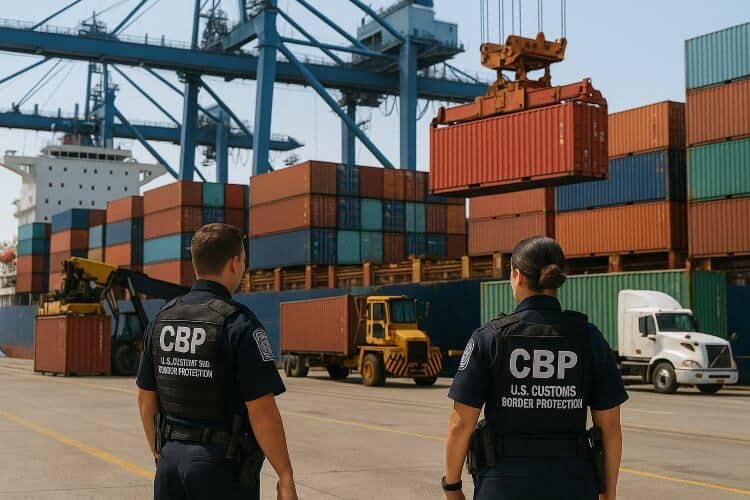
Failing to file your ISF on time or not filing it at all can be very costly. CBP can fine you up to $5,000 for each ISF violation, up to a maximum of $10,000 per shipment. Besides monetary fines, late or missing ISFs can lead to cargo holds and delays.
Filing late, filing with inaccurate or incomplete data, or completely failing to file are all violations that can carry the $5,000 fine. If your shipment was cancelled or changed and you fail to withdraw or update an ISF, you may also be fined $5,000.
Note that CBP may sometimes reduce penalties under certain circumstances – for example, if it’s your first violation and you can show it was an honest mistake. But you shouldn’t count on this; always seek to get the filing right.
Requirements of the Importer Security Filing
There are 12 important requirements when filing an ISF. They are called data elements. You, as the ISF importer, are responsible for providing 10 data elements, while the ocean carrier provides 2 data elements. This is therefore known as the “10+2” data elements.
The ISF “10+2” Data Elements?
The 10 Data Elements you provide:
- Name and address of Seller
- Name and address of Buyer
- Importer of Record Number / FTZ (Foreign Trade Zone) applicant identification number
- Consignee Number(s)
- Manufacturer (or Supplier) name and address
- Ship To Party, i.e., Name and address of the first deliver-to location in the U.S.
- Country of Origin
- Commodity (Harmonized Tariff Schedule of the United States) HTSUS Number
- Container Stuffing Location
- Consolidator (Stuffer) name and address
The “+2” Data Elements provided by the ocean carrier
- Vessel Stow Plan
- Container Status Messages (CSM)
Always remember to accurately reference the carrier’s Bill of Lading number so that CBP can match your 10 data elements with the carrier’s 2 data elements in their system. Even one missing or wrong element can result in penalties, as we explained earlier.
What Is an ISF‑5? (Special Cases)

In certain special cases, what you need is an ISF-5, and not the regular ISF “10+2.” ISF-5 is a shortened version of the Importer Security Filing requirement that applies to transit cargo not intended to enter U.S. commerce but pass through U.S. ports. These shipments include:
- FROB (Foreign Remaining On Board): This applies to cargo just transiting through U.S. ports but not being unloaded. For example, a ship going from Europe to Mexico might stop in New York; the containers bound for Mexico are FROB in the U.S.
- IE (Immediate Exportation): Cargo that is unloaded in a U.S. port and then immediately exported outbound, without being formally imported. For instance, goods that arrive in Los Angeles but are immediately put on another vessel or plane to a different country.
- T&E (Transportation & Exportation): Cargo that is shipped under bond from one U.S. port to another U.S. port for the purpose of export.
For these situations, CBP still wants advance information, but since the goods aren’t staying in the U.S., they require only 5 data elements instead of 10. This is why it’s called ISF-5. The five data elements for ISF-5 filings are:
- Booking Party
- Foreign Port of Unloading
- Place of Delivery
- Ship To Party
- Commodity HTSUS Number
The ISF-5 must also be filed 24 hours before loading for IE and T&E. However, CBP allows filing any time before loading for FROB.
How to File ISF
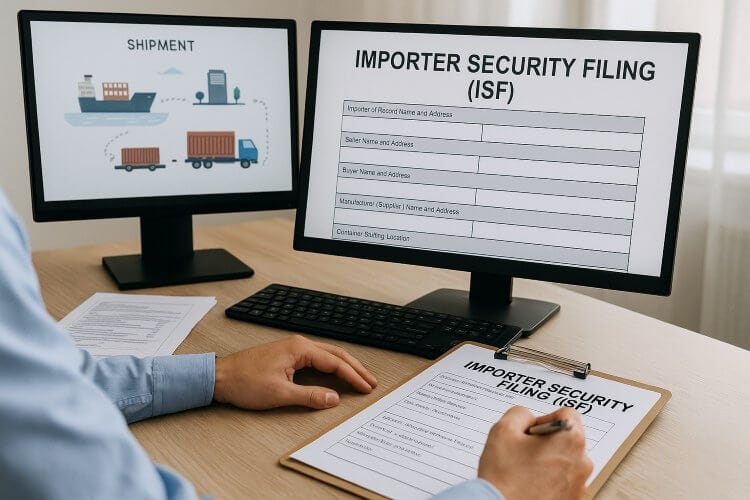
As we mentioned earlier, you or your customs broker/freight forwarder can file ISF following these steps:
- Gather all required information: Since you already know the 10 data elements you must provide, then coordinate with your supplier, freight forwarder, and any other party to collect these details. It’s wise to verify things like addresses and HTS codes now because correcting them later can be stressful. We recommend that you create an ISF information sheet for each shipment so you miss nothing.
- Choose your filing method: ISF must be filed electronically with CBP. There are two ways you can do this:
- File through a Customs Broker or Freight Forwarder: This method is common and easier for you. You provide the data, and they’ll submit the ISF on your behalf through their automated system.
- File yourself through the ACE Portal or ABI software: To submit ISFs on your own, you can use CBP’s Automated Broker Interface (ABI) or the ACE (Automated Commercial Environment) web portal. You need to create an account and obtain a filer code or SCAC (Standard Carrier Alpha Code) to do this.
- Use a third-party ISF filing platform: Some online services are certified by CBP to file ISF. You input your shipment details on their website, pay a fee, and they transmit the ISF for you.
- Submit the ISF to CBP: Once you or your agent has all the data in the system, the ISF is submitted electronically. If you’re doing it via ACE, you’ll fill out the ISF entry with the 10 data fields, plus the vessel/Voyage and B/L reference, and send it in. The system will return an acknowledgment from CBP. If you get an error message, correct it immediately and re-submit.
- Monitor and follow up: After filing, it’s a good practice to keep an eye on the ISF status to be sure no issues come up. Watch out for any notifications from CBP. In most cases, if you don’t hear anything and your forwarder confirms loading went fine, your ISF is likely okay. If any of your information needs to be updated or withdrawn, you should file an ISF update.
How much does ISF cost?
CBP does not charge you when you file an ISF. However, if you use a service or agent to file, they will charge you a service fee.
Most customs brokers or freight forwarders charge about $30 to $50 for each ISF filing they do. If you do not have a continuous customs bond, you will need a single ISF bond to accompany the filing. Your custom broker may bundle the ISF filing and bond together for a total of around $80 to $150. If you import frequently and have a yearly continuous bond, then you only have to pay for the filing.
Paying a small fee to a freight forwarder to get your ISF filed right is a small price to pay, compared to the penalties incurred if something goes wrong.
Winsky’s tips and Best Practices for Filing ISF Correctly
Here’s a list of our top recommendations you should follow when filing the ISF:
- Start early, never wait until the last minute.
- Double-check all data for accuracy.
- Communicate clearly with your partners- supplier, freight forwarder, or customs broker
- Use a Reliable Freight forwarder
- Have a continuous bond if you plan to import regularly
- File early, even if the information is not perfect, and then update.
- Keep records of your ISF filings
Conclusion
There’s all you need to know about the Importer Security Filing. Filing the ISF correctly and on time will save you from expensive fines and shipping headaches.
If you’re unsure where to start, or you’d rather not deal with the stress of filing it yourself, then use Winsky Freight. We handle ISF filings for clients around the world every day and make sure every piece of information is filed correctly the first time. Contact us today for a smooth US shipping experience.
FAQs
What will happen if Incorrect information is filed on ISF?
You can be issued a penalty of $5,000 if you file the wrong information on your ISF. However, CBP allows you to update your ISF if you realize something is wrong before the vessel arrives at the US port.
Can I authorize ISF Filing to my freight forwarder or customs broker?
Yes, absolutely. You can authorize a freight forwarder or a licensed customs broker to file the ISF on your behalf to make the process easier.
What’s the difference between ISF-5 and ISF-10?
ISF-10 is required for goods being imported into the U.S., and includes 10 data elements from the importer and 2 from the carrier. ISF-5, on the other hand, is used for transit cargo just passing through U.S. ports, and it only requires 5 data elements.

Leave A Comment