
What is the Difference between CIF and FOB?
Incoterms are rules that govern international trade. Of the 11 incoterms available in global shipping, CIF and FOB are two of the most popular. While they’re both used for sea freight, they give different levels of control and responsibility to the buyer and seller. In this article, you’ll learn what CIF and FOB really mean, what you and the seller are each responsible for, and how to decide which option is better for you.
What is CIF?
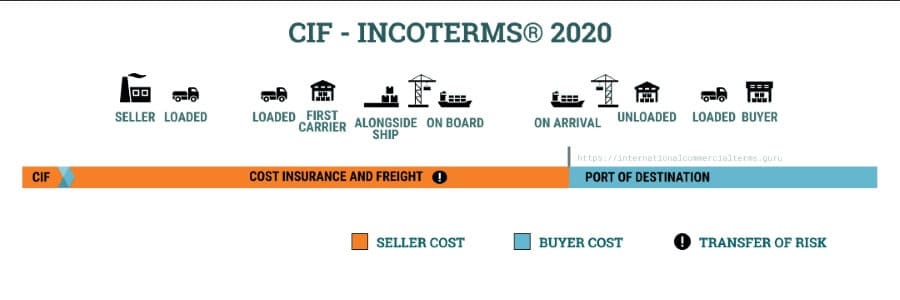
“CIF stands for Cost, Insurance, and Freight.” It is an incoterm where the seller handles the costs and risks of the transportation until the goods arrive at the destination port. This means the seller puts the goods on the ship, pays for shipping to your port, and buys minimum insurance to protect your goods during the trip.
You should note that “CIF is only used” for sea or inland water transport. Even though the seller handles most of the journey, you are responsible for transporting the goods from the port to your warehouse.
What does a buyer do in CIF?
- Paying for the goods as agreed in the contract.
- Handling import customs, including duties and taxes at your port
- Unloading and transport from your port to the final destination
A buyer may also be responsible for other duties like filing insurance claims if goods are damaged or lost during sea transport.
What does a seller do in CIF?
- Preparing and packaging goods
- Completing export customs and paperwork
- Loading goods onto the ship at the origin port
- Paying for sea freight to your port.
- Buying minimum insurance
- Providing important documents like the bill of lading, commercial invoice and insurance certificate.
Remember that the seller already includes the costs of these in the costs of goods. As a result, CIF may appear more expensive for buyers.
When does risk transfer from seller to buyer in CIF?
The moment the goods are loaded onto the vessel at the seller’s port, risk moves from the seller to you. Even though the seller continues to pay for freight and insurance until the goods reach your port, you take responsibility for any damage or loss from the loading point onward.
Pros and Cons of CIF
Pros of CIF
- Easier for first-time buyers: If you’re new to international trade, CIF makes the shipping process easier for you because the seller arranges the main part of the shipping.
- Less work arranging transport: In most cases, you don’t have to find your own freight forwarder under a CIF term, as the seller handles shipping.
- Basic insurance is already included: Minimum insurance is compulsory in CIF shipping, which gives your goods some protection if they are damaged or lost at sea.
- Predictable upfront costs: It is easier to plan your shipping budget because the seller includes freight and insurance in the price you pay.
Cons of CIF
- You take risk early: Even though the seller pays for shipping and insurance, the risk shifts to you the moment goods are loaded on the ship. If anything happens during transport, you are responsible, even when it’s not your fault.
- Limited insurance coverage: Many sellers buy the cheapest insurance available. This offers only basic protection and may not cover some types of damage, so you might need to buy extra coverage yourself.
- Higher total costs: Since the seller arranges shipping and insurance, they might choose more expensive options or add a markup. You may end up paying more than if you handled it yourself.
- Less control over shipping: You don’t choose the carrier or shipping schedule in a CIF incoterm. If the seller picks a slow route or an unreliable company, you have little say in it.
What is FOB?
“FOB stands for Free on Board. FOB” means the seller must deliver the goods to the port and load them onto the ship you choose. Once the goods are safely loaded on board, the seller’s duties stop. From there, you are in charge of sea freight, insurance, unloading, and delivery to your final destination.
Unlike in CIF, you’re responsible for choosing and paying the shipping carrier under FOB terms. This means you can choose your own insurance and get cheaper freight costs if you’re able to negotiate better deals with shipping companies. Like CIF, FOB is only used for sea or inland waterway transport.
What does a buyer do in FOB?
- Choose the ship or carrier and manage sea transport from the seller’s port
- Pay for freight, insurance, unloading, and land transport to your final location
- Handle import customs, duties, taxes, and documentation at your port.
- Unloading and transport from your port to the final destination
What does a seller do in FOB?
- Preparing and packaging goods for export
- Inland transportation to the loading port.
- Clearing export customs and handling required documentation
- Loading goods onto the ship you choose
When does risk transfer from seller to buyer in CIF?

The moment goods are on board the vessel at the shipment port, risk shifts to you. Any loss or damage during sea transit, unloading, or further transport becomes your responsibility.
Pros and Cons of FOB
Pros of FOB
- Greater control: FOB puts you in charge of your shipping route, carrier, and insurance plan.
- Easy to work with Freight forwarders: The FOB term makes it easy for you to work with a trusted freight forwarder that can handle the entire shipping on your behalf.
- Potential cost savings: You get to negotiate freight rates and insurance directly with shipping carriers, and this can help you save more money.
- Reduced costs and responsibilities for sellers.
Cons of FOB
- More responsibility: The FOB incoterm leaves a lot of responsibilities on the buyer- freight, insurance, unloading, and customs.
- Less friendly for new buyers: As a result of the increased responsibilities in FOB, first-time buyers would face huge difficulties if they try to navigate this shipping on their own.
- Higher risk for buyer: Because the risk shifts to the buyer early, it is more difficult to prove damages in cases of dispute with the seller.
- Requires an understanding of shipping logistics: You must understand the basics of customs clearance and shipping to use this incoterm.
Differences Between CIF and FOB
Let’s examine the major differences between these two incoterms under the following areas:
Cost
In CIF, the seller pays for the sea freight and basic insurance until the goods reach your destination port, but in FOB, you pay these and other fees yourself.
Risk Transfer
In CIF, risk passes to you when the goods are loaded onto the ship at the seller’s port, even though the seller pays for freight and insurance to your port. In FOB, the risk is yours from the same point, i.e., when the goods are on board the ship. However, the difference is that you’re in charge of shipping and insurance from that moment.
Shipping Control
In CIF, the seller decides the carrier, route, schedule, and insurance, while in FOB, you pick the carrier, negotiate rates, choose your insurance, and set your shipping schedule.
Insurance Coverage
In CIF, the Seller buys at least minimum maritime insurance, while in FOB, you’re free to choose the insurance coverage you require based on your needs and risk appetite .
Cost Comparison
CIF is usually more expensive because the seller includes freight and insurance in the price, while FOB is cheaper because you negotiate freight and insurance yourself.
| Aspect | CIF (Cost, Insurance & Freight) | FOB (Free on Board) |
|---|---|---|
| Who arranges shipping? | Seller | Buyer |
| Who pays for sea freight? | Seller | Buyer |
| Who pays for insurance? | Seller (basic insurance only) | Buyer (can choose full coverage) |
| Who handles export customs? | Seller | Seller |
| Who handles import customs? | Buyer | Buyer |
| Risk transfers when? | When goods are loaded onto the ship at origin port | When goods are loaded onto the ship at origin port |
| Control over shipping? | Low – seller picks carrier, route, and schedule | High – buyer chooses carrier, insurance, and schedule |
| Ease for buyer | Easier because seller handles more steps | More complex because buyer manages more responsibilities |
| Best for | New or small importers with less shipping experience | Experienced buyers who want control and cost savings |
CIF vs. FOB: Which Is best for you?
The decision to use CIF or FOB depends on your experience in international trade, how much control you want over the shipping process, and whether you prefer simplicity or cheaper costs.
If you are new to importing or don’t have much knowledge about shipping, CIF may be the better choice because the seller handles the most difficult parts of the process.
On the other hand, if you have more experience with shipping or want to save money, FOB might suit you better. Also, if you have a trusted freight forwarder, then you could choose FOB and leave the rest of the logistics for your freight forwarder to handle.
For sellers, FOB is generally better because they have less stress in the shipping process. It works best for sellers with limited logistics capacity. However, this may also mean less money for the seller. A seller that wants more customers would need to offer CIF terms.
In the end, neither term is better than the other. The right choice depends on what works best for you, either as a seller or a buyer.
Conclusion
Finally, whether you choose CIF, FOB or even another incoterm like DDP, using the right freight forwarder determines how easy your shipping goes. And that’s where Winsky Freight comes in. Whichever incoterm you choose, we’re always available to manage shipping and handle all paperwork on your behalf. Are you ready to ship your goods from China? Contact us today for a smooth shipping experience.
FAQs
When do I Choose CIF?
You should choose CIF if you’re new to international trade or don’t want to deal with shipping logistics. CIF is also a good option when the seller has better access to shipping services and can get better rates than you can.
When do I choose FOB?
FOB is a great choice if you already have a freight forwarder or know how to handle shipping and insurance yourself. If you want more control over shipping, choose FOB.
Which Is Cheaper, FOB or CIF?
FOB is usually cheaper than CIF because you can shop around for better freight and insurance rates. With CIF, the seller includes their shipping and insurance costs in the product price and sometimes adds a markup, which makes it more expensive.
Leave A Comment