
How to get an Import License in the USA? Everything you need to know
If you’re planning to ship goods from China to the United States, one important question you might have is- Do I need an import license? You’re not alone; many importers ask us the same question every year.
At Winsky, we understand that the process can be confusing, especially if it’s your first time shipping to the U.S. So, we’ve put together this simple, easy-to-follow guide. You’ll learn what an import license is, who needs one, and how to apply if needed. Read on to find out whether your next U.S. shipment needs an import license.
- What is an import license—and do you need one?
- Which goods require import licenses or permits?
- How to apply for USA Import license
- What Documents do you need for US import license
- How much does an import license cost in the USA?
- How long does it take to get an import license from the USA?
- Winsky’s Tips to avoid USA Import License mistakes and delays
- FAQs
What is an import license—and do you need one?
An import license (sometimes called an import permit) is an official document that allows you to bring certain regulated goods into a country. When shipping to the United States, no general import license is required for all imports. You can import most goods into the USA without any special license.
However, some goods are regulated or restricted in the USA, so you do need a license for those. These licenses aren’t issued by the CBP. They’re instead issued by other federal agencies that oversee those products. For example, a license from the U.S. Department of Agriculture might be needed to import certain plants, or a permit from the Alcohol and Tobacco Tax and Trade Bureau for certain alcohol imports.
Which goods require an Import License?
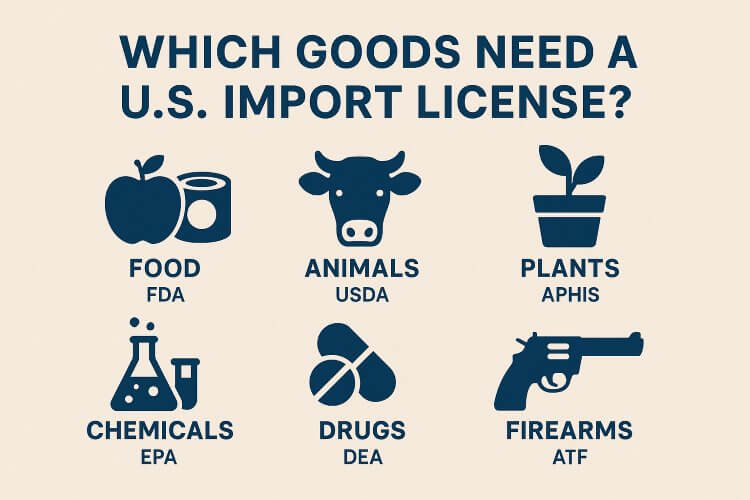
You only need an import license if the product you’re bringing in is subject to special U.S. government controls. While most products don’t need a license, some goods do require import permits or licenses due to health, safety, or security regulations. Common categories of these goods are:
- Agricultural and food products: Some foods like dairy products (cheese, milk), many fruits and vegetables, meat and poultry, livestock, tobacco, and plant products need permits from agencies like the USDA or FDA before being imported into the USA. You can obtain the permit from the Foreign Agricultural Service by filling a FAS form.
- Plants, animals, and wildlife: Anything involving live animals, plant materials (like seeds or nursery stock), or wildlife products can be regulated. You may need permits from USDA’s APHIS for plants and live animals, or an import license from the U.S. Fish and Wildlife Service for wildlife and endangered species products.
- Arms, ammunition, and defense articles: Firearms, ammunition, explosives, and military/defense equipment require strict licensing. To import guns or ammo, you must obtain a permit from the Bureau of Alcohol, Tobacco, Firearms and Explosives (ATF). Military-grade hardware or defense articles may also fall under State Department regulations.
- Drugs, medical devices, and controlled substances: Prescription pharmaceuticals, medical devices, and any controlled chemicals or drugs are highly regulated. You need approval from the Food and Drug Administration (FDA) (and for controlled drugs, possibly the DEA) before import.
- Consumer products with special standards: Some products must meet U.S. standards or certifications before import. For instance, household appliances and industrial equipment need to comply with U.S. energy efficiency and safety standards. They must have Department of Energy (DOE) certification reports before you can import them. While this may not be a “license” in the traditional sense, you cannot import such items legally without showing they meet required standards.
- Chemicals and hazardous materials: Chemicals, especially toxic or ozone-depleting substances, pesticides, etc., require permits from agencies like the Environmental Protection Agency (EPA). If you import chemicals that could pose environmental or health risks, check EPA regulations for any import permit or notification required.
- Precious metals and gems: In some cases, large quantities of precious metals (gold, silver) or gems might have reporting requirements and licenses. For example, you need a license to import rough diamonds under the Kimberley Process.
- Others: There are many other specialized categories. Radioactive materials need licenses from the Nuclear Regulatory Commission (NRC). Vehicles and engines must meet DOT and EPA standards (though no “license,” you must get approvals for emissions and safety). Alcohol and tobacco imports require permits through the Alcohol and Tobacco Tax and Trade Bureau (TTB) or ATF. Cultural artifacts or art may need permits if protected by laws or treaties.
We know it seems complex, but you always have to double-check if your product is regulated. In Chapter 39 of this CBP Guide document, you can find a list of items that may need a license. If your item falls into one of these categories, you will need to get the appropriate license from the relevant federal agency before importing.
How to apply for USA Import license
Follow these steps to obtain an import license from the USA:
- Confirm that your goods need a license: Before anything, you must know if your goods require a license in the first place. Whether you need a license or not depends on:
- The product being imported
- The intended use of product
- Product’s origin country,
- Who is sending and receiving it
- The port of entry in the US.
- Regulations set by any federal agencies or Partner Government Agencies (PGAs)
- Identify the responsible agency: If you confirm your product does need a license, the next step is to identify the federal agency that oversees that product category. Like we explained earlier, different agencies handle different imports; they are sometimes called Partner Government Agencies, or PGAs. The table below shows some examples of agencies and their areas:
| Product Type | Responsible U.S. Agency |
|---|---|
| Live animals, plants, seeds, soil | USDA – Animal and Plant Health Inspection Service (APHIS) |
| Dairy products (milk, cheese, butter) | USDA – Foreign Agricultural Service (Dairy Import Licensing Program) |
| Meat, poultry, eggs | USDA – Food Safety and Inspection Service (FSIS) |
| Fruits, vegetables, other food items | FDA – Food and Drug Administration; USDA (depending on the product) |
| Alcohol (wine, beer, spirits), Tobacco products | Alcohol and Tobacco Tax and Trade Bureau (TTB); ATF (for some items) |
| Firearms, ammunition, explosives | Bureau of Alcohol, Tobacco, Firearms and Explosives (ATF) |
| Wildlife, wildlife products (e.g. ivory) | U.S. Fish and Wildlife Service (FWS) |
| Pharmaceuticals, medical devices | Food and Drug Administration (FDA) |
| Chemicals, pesticides, hazardous waste | Environmental Protection Agency (EPA) |
| Nuclear materials, radioactive items | U.S. Nuclear Regulatory Commission (NRC) |
| Vehicles and engines | Department of Transportation (DOT); Environmental Protection Agency (EPA) |
| Electronics and wireless devices | Federal Communications Commission (FCC) |
| Cosmetics and personal care products | Food and Drug Administration (FDA) |
| Cultural artifacts, antiques | U.S. Customs and Border Protection (CBP); Department of State (if restricted items) |
| Rough diamonds | U.S. Census Bureau; Office of Foreign Assets Control (OFAC) – Kimberley Process |
If you’re not sure which agency applies, ask Winsky Freight or contact a CBP import specialist for guidance.
- Contact the agency and follow their application process: Most agencies have their application forms and steps to follow on their website. Find this, fill out the forms, and submit your application. Be sure to check the requirements carefully, because some agencies might have extra rules for the license e.g., quota limits, allowed ports of entry, or special labeling requirements for the imported goods.
- Obtain the license and keep it handy: After getting your license, add it to your documents needed for import customs clearance at the port. Don’t forget to file the standard CBP entry paperwork for your shipment (commercial invoice, bill of lading, entry forms, etc.) within 15 days of your goods arriving. You can read our guide to handling import tax in the USA to make your clearance process easier.
What Documents do you need for US import License
- Importer Identification (EIN obtained from the IRS or SSN)
- Dun & Bradstreet Number D-U-N-S Number
- Business Registration Documents
- Product information including:
- Product Description
- Harmonized Tariff Schedule (HTS) code
- Country of origin
- Intended use or end-use statement
- Customs bond evidence
- Broker’s information and power of attorney (if using a broker)
How much does an import license cost in the USA?

Getting an import license in the USA is usually low-cost or free. There is no general fee to register as an importer in the U.S., and most government agencies do not charge a standard fee just to issue an import permit. In many cases, you just need to apply and submit the required forms.
Agencies like the U.S. Fish and Wildlife Service (FWS) charge about $100 for a new import/export license and $50 for renewing or amending it. USDA/APHIS permits for plants or animals may have small administrative fees of around $70-$100, depending on the type of permit.
How long does it take to get an import license from the USA?
Many import licenses are processed in about 30 to 60 days when you apply online and provide the needed information. Licenses related to national security, e.g., high-tech defense items or things like biological materials, might undergo extra scrutiny. It is best to plan ahead so it doesn’t affect your shipping.
Winsky’s Tips to avoid USA Import License mistakes and delays
Here are our top tips to help you get your import license easily:
- Check early whether a license is needed. Ask your freight forwarder if you’re unsure.
- Start the application process in advance. Never wait until the last minute.
- Ensure your application is complete and accurate
- Read instructions carefully and follow them all.
- Stay up to date, because regulations may change.
- Use a freight forwarder or customs broker. It makes your job way easier.
- Have your customs bond and other entry documents ready.
Conclusion
Getting an import license is easy once you follow the process we’ve laid out in this article. But always remember to check first whether you need a license, because most of the time, you don’t. If you’re unsure or need help understanding the U.S. import process, Winsky Freight is here to help. Contact us, and our team will get back to you within hours. We look forward to hearing from you.
FAQs
Do I need an import license for China to USA shipping?
Importing most goods from China to the USA doesn’t require a license. You only need an import license if the product you’re bringing in is subject to special U.S. government controls. We’ve listed some of these products in the article above.
How do I know if my product needs an import license?
Check which federal agency regulates your product and read what their rules are. In the above, you’ll find a list of products and the agencies responsible for them, like the FDA, USDA, EPA, or ATF. You can also ask a CBP import specialist or contact Winsky Freight to confirm if your products need an import license.




Leave A Comment